


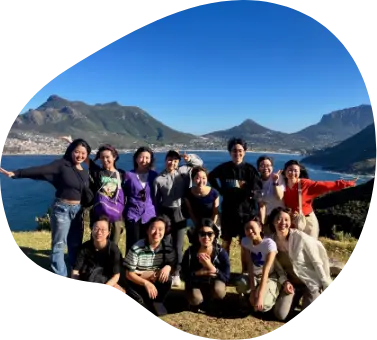


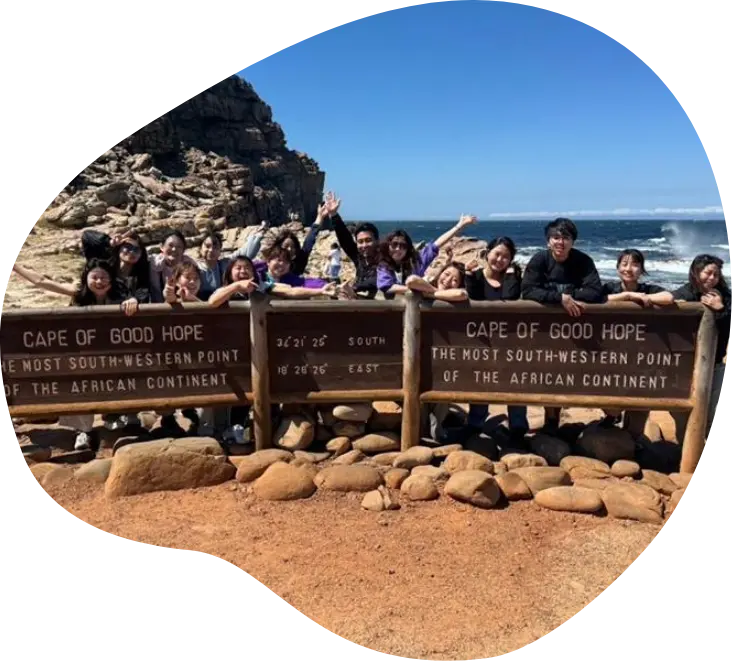
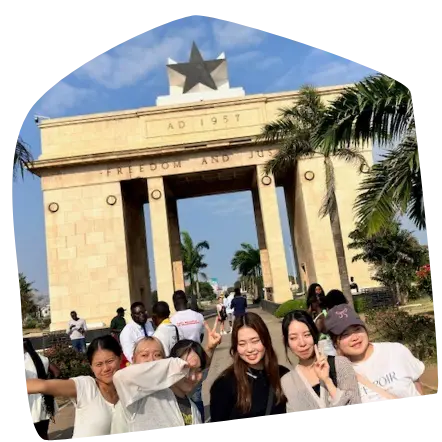

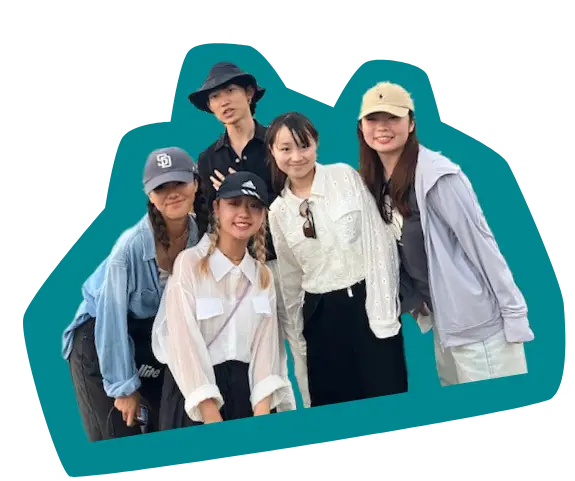









For many Japanese people, Africa—both physically and psychologically distant from Japan—still evokes images of conflict, poverty, and infectious diseases, perceptions that have largely remained unchanged for the past 30 years.
This program aims to provide participants with a deeper understanding of the challenges faced by an African country they visit, as well as the historical contexts behind those issues, through firsthand field experiences in a rapidly changing Africa.
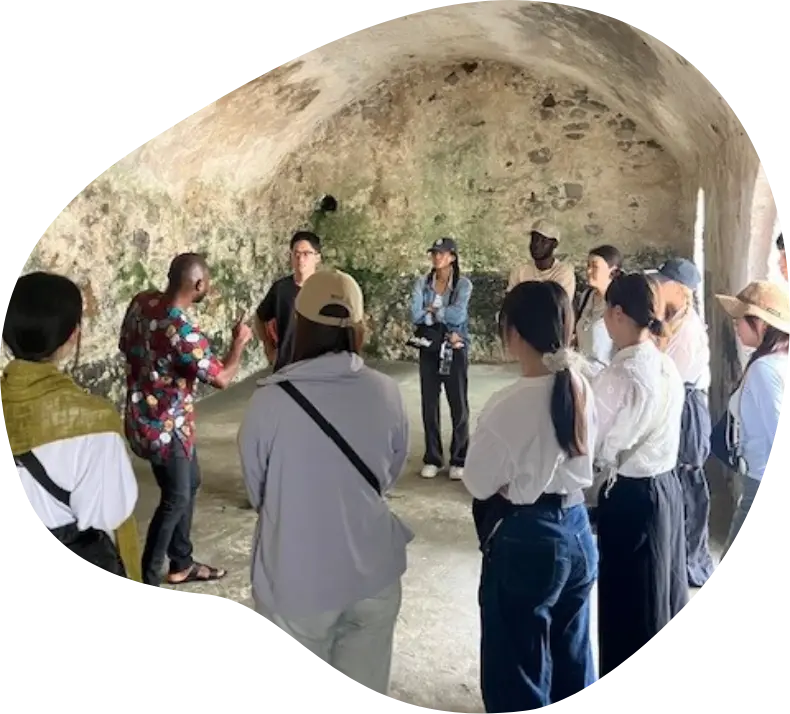
In addition to gaining knowledge through classroom learning, as the course title “Learn from Africa” suggests, the program places great importance on dialogue and interaction with local people. Through meaningful encounters and mutual learning with people in the host country and fellow participants, students deepen their understanding and broaden their perspectives.
The destination country will vary depending on the travel period. Based on the strong foundation established through the continuous implementation of the “Learn from Africa” program since 2015, we are planning to send students to Ghana, Côte d'Ivoire, and South Africa.
The program is offered during the summer and spring breaks. Applications and selection are conducted from April to May and from October to November, respectively. For further details, please refer to the application guidelines available on the student portal, My Sophia.
In collaboration with the Japan International Cooperation Agency (JICA), approximately three students from our university will be dispatched for four weeks as JICA volunteers (JICA Japan Overseas Cooperation Volunteers) to the Japan Corner (Center for Japanese Language Education and Japanese Studies Promotion) at Félix Houphouët-Boigny University (hereinafter referred to as “Boigny University”) in Abidjan, Côte d'Ivoire, one of our university's partner institutions, to engage in volunteer activities. hereinafter referred to as “Boigny University”).
The Japan Corner (Center for Japanese Language Education and Japanese Studies, hereafter “the Center”) offers Japanese language courses, administers the Japanese Language Proficiency Test (JLPT) and Japanese speech contests, and promotes Japanese culture through initiatives such as library services, film screenings, various academic exchanges, and Japan–Côte d’Ivoire cultural events, supported by the Japanese government and Japanese companies. Participating students will work alongside the university’s faculty and staff, students, and Japanese language instructors dispatched by Japanese private foundations to support Japanese language education, teaching material development, and the planning and management of events promoting Japanese culture as volunteers.
Through volunteer activities in Côte d’Ivoire, participants aim to gain an understanding of the development challenges faced by developing countries in Africa and to develop the ability to view global issues—such as poverty and education—from multiple perspectives. In collaboration with faculty and students at Félix Houphouët-Boigny University, participants will analyze and identify local needs and challenges, and through hands-on volunteer activities designed to address these issues, they will cultivate practical problem-solving skills and the ability to work effectively in international collaborative settings.
An intensive course offered in the fall semester (held from February to March). Applications and selection are conducted from April to May of the previous year. The application guidelines will be posted on the student portal, My Sophia, so please refer to them for program details and the application procedure.
Scheduled to be offered in the 2027 academic year
Sado is the sixth-largest island in Japan and the largest in the Sea of Japan. It is distinguished by its rich biodiversity and unique ecosystems, and is also renowned for its vibrant culture, breathtaking landscapes, fresh local cuisine, and historical significance.
From the 17th to the mid-19th century, large-scale mining made Sado widely known as a gold-producing island. In recognition of this history, the Sado Island Gold Mines were inscribed as a UNESCO World Cultural Heritage Site in 2024. In recent decades, on the other hand, great efforts have been made to preserve the island’s natural environment. Sado became one of the first Globally Important Agricultural Heritage Systems (GIAHS) sites among developed countries and has since promoted environmental conservation agriculture (ECA).
This field-based lecture will offer students a valuable opportunity for cross-disciplinary learning. They will be able to study the island through diverse perspectives, including environmental history, agricultural development, water science and engineering, ecological conservation, traditional arts, and eco-tourism. It will also give students the chance to interact with local farmers and fishermen. The island’s innovative approaches to the sustainable use of natural resources can inspire students from Africa and Japan as they consider pathways toward sustainability in their own contexts.
This program is designed to promote environmental learning in an integrative way and to help students develop the skills necessary for fieldwork. Through this program, students will deepen their understanding of the importance of integrative learning in pursuing environmental conservation. It also aims to provide international students with opportunities to learn about Japan’s natural environment, society, and its commitment to sustainability. Another objective is to provide constructive feedback to the communities of Sado Island, thereby contributing to their further advancement while offering students an opportunity for service learning.
An intensive course offered in the spring semester (held from August to September). Applications and selection are conducted from April to May. The application guidelines will be posted on the student portal, My Sophia, so please refer to them for program details and the application procedure.
Scheduled to be offered in the 2027 academic year, for inbound students only
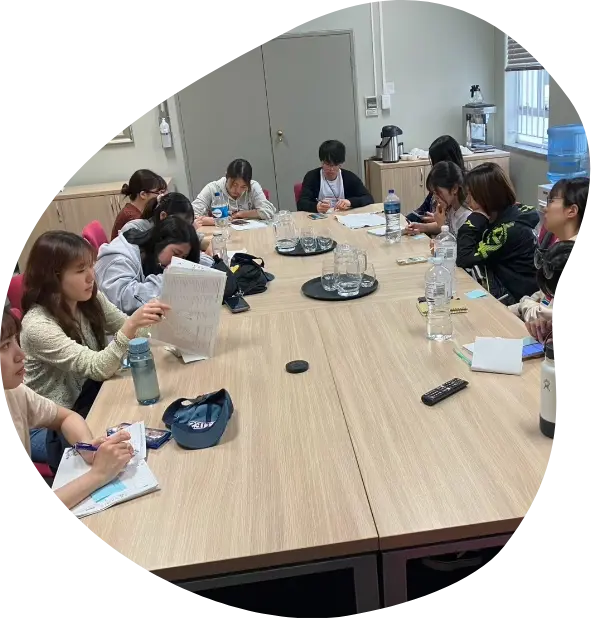
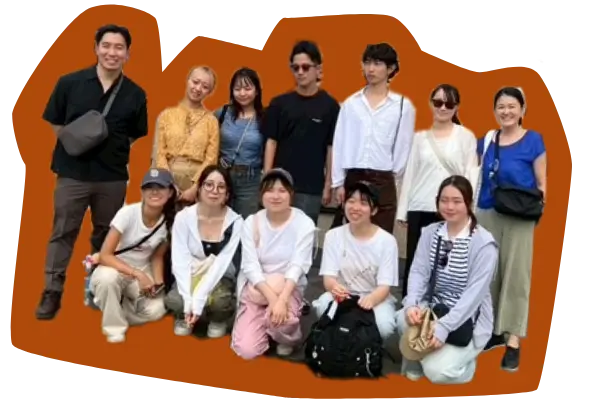

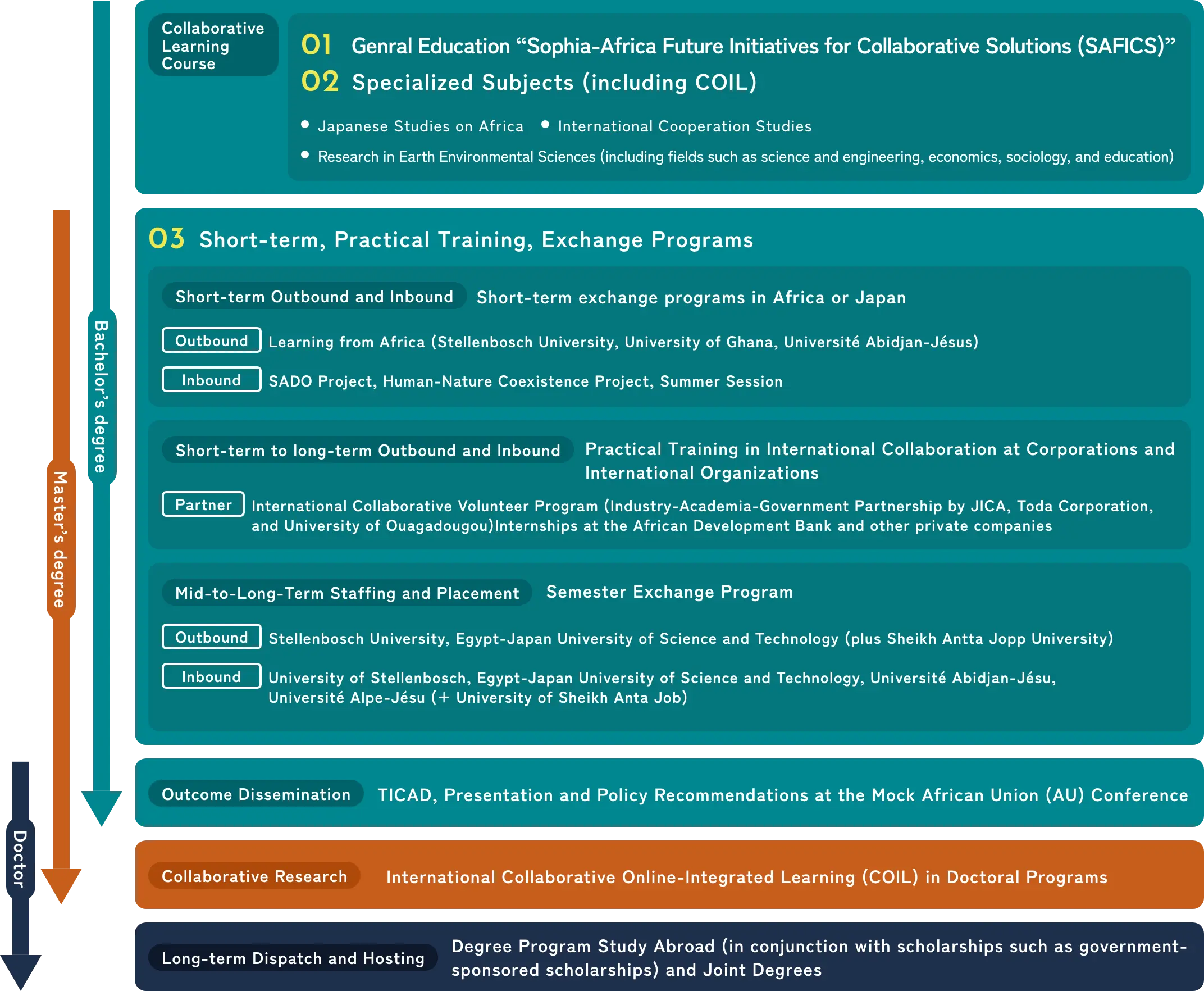
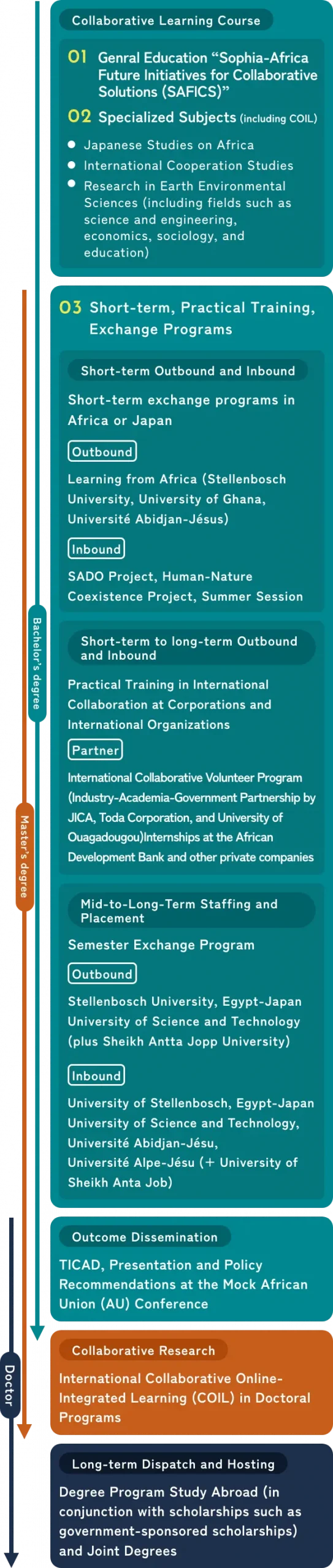

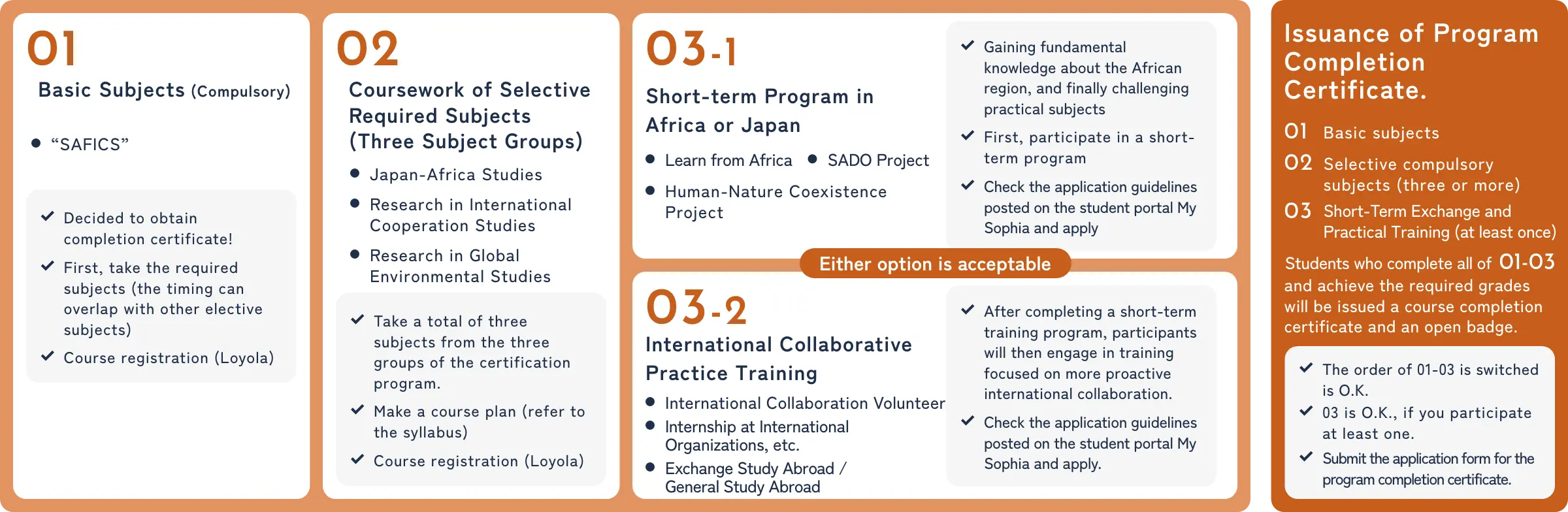
Students from our university and visiting students from partner institutions who complete all required curriculum with the specified grades, meeting the conditions of: 01 Genral Education, 02 At least 3 courses from Specialized Subjects, and 03 At least 1 participation in Short-Term/Practical Training/Exchange Programs, will be issued an Open Badge as proof of course completion.
※You may enroll in only some of the individual courses, but in such cases, you will not be eligible for a certificate of completion.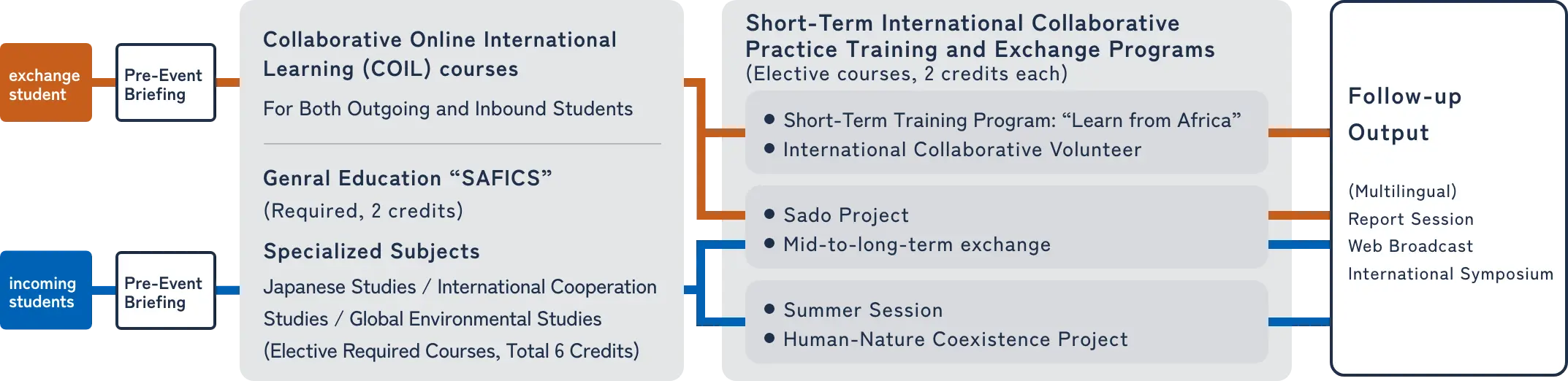
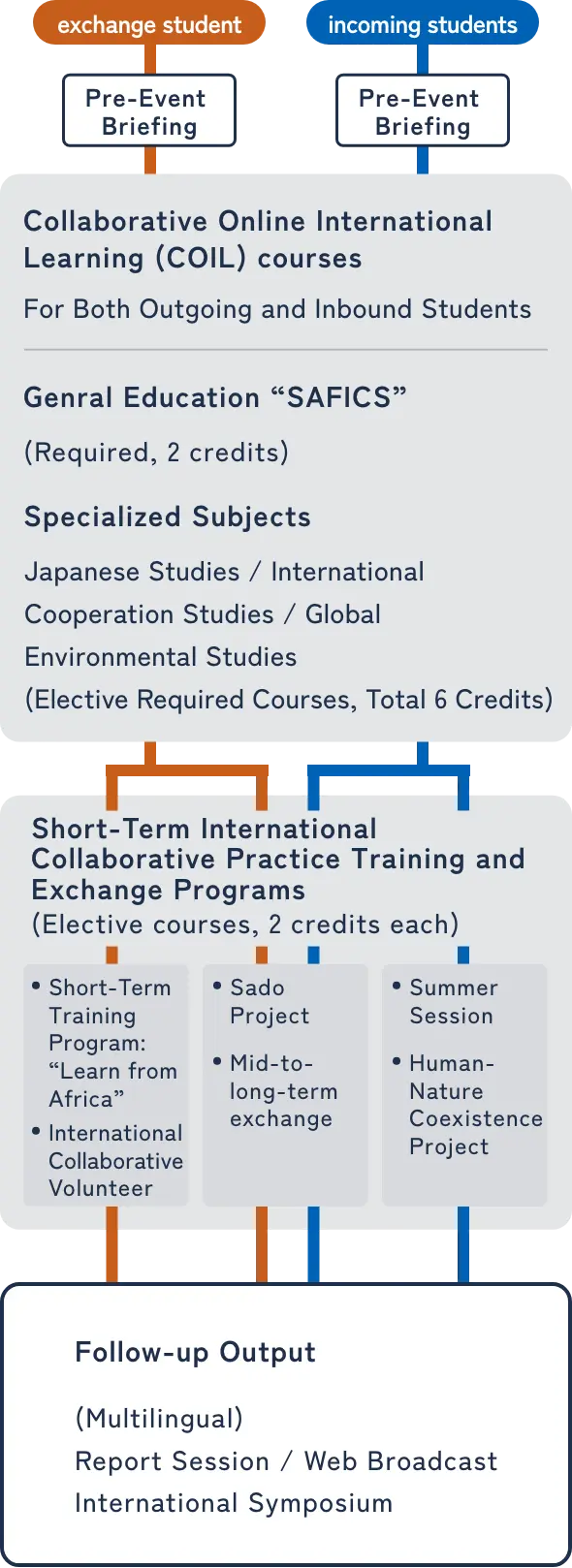

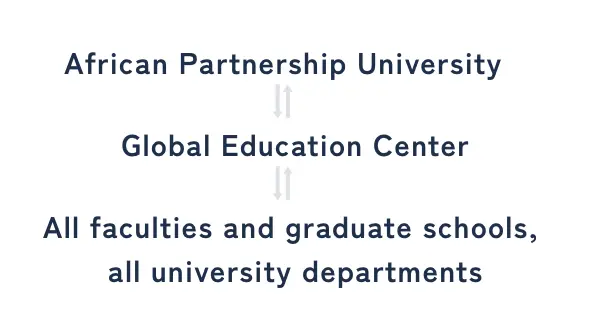

There is no specific course of study, and students can flexibly plan their coursework according to their own interests and schedules.
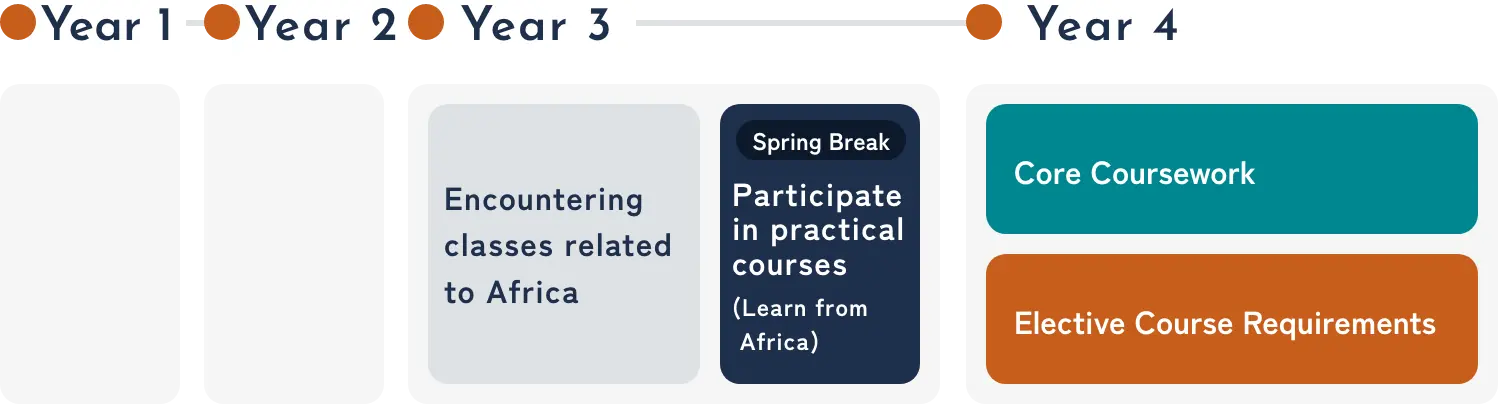
Basic cases for gaining experience from core coursework, Elective Course, and practical subjects

First, experience Africa on the ground, deepen your learning on campus, and then challenge yourself to a long-term study abroad program in Africa once again.

After taking French courses, a case where interest developed in the Japan-Africa Collaborative Practice Program

After gaining practical experience, I decided to pursue certification in the Japan-Africa Collaborative Practice Program during the fall of my second year.

Cases learned through actual long-term stays in the field

A case where one encountered Africa in their third year, pursued research in graduate school, and aims to become a researcher after graduation.

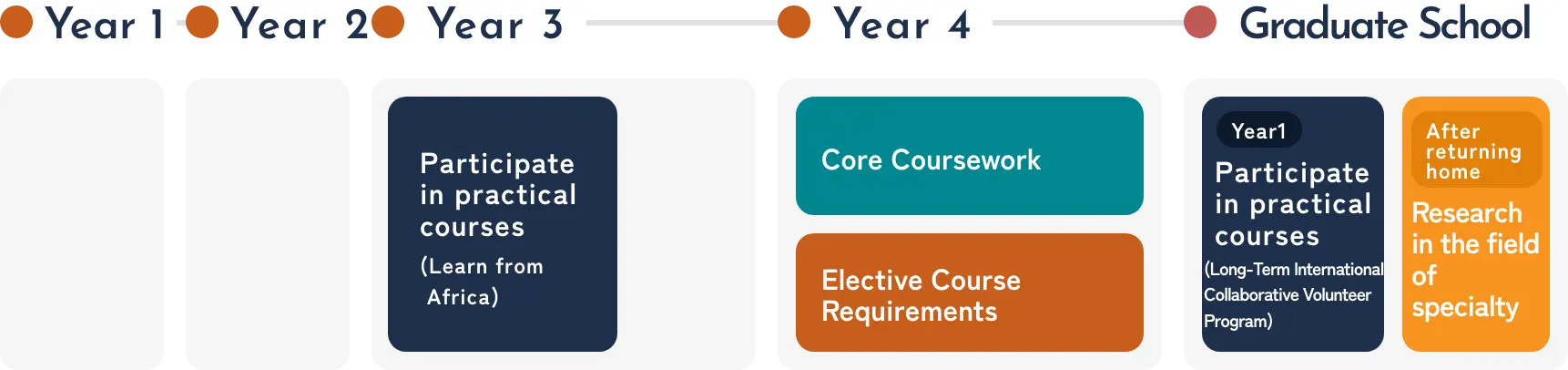
A case where a student encountered an African studies course in their third year and aims to obtain a certificate of completion.


If you have any questions or concerns about the Japan-Africa Collaboration Program, please contact us here.